
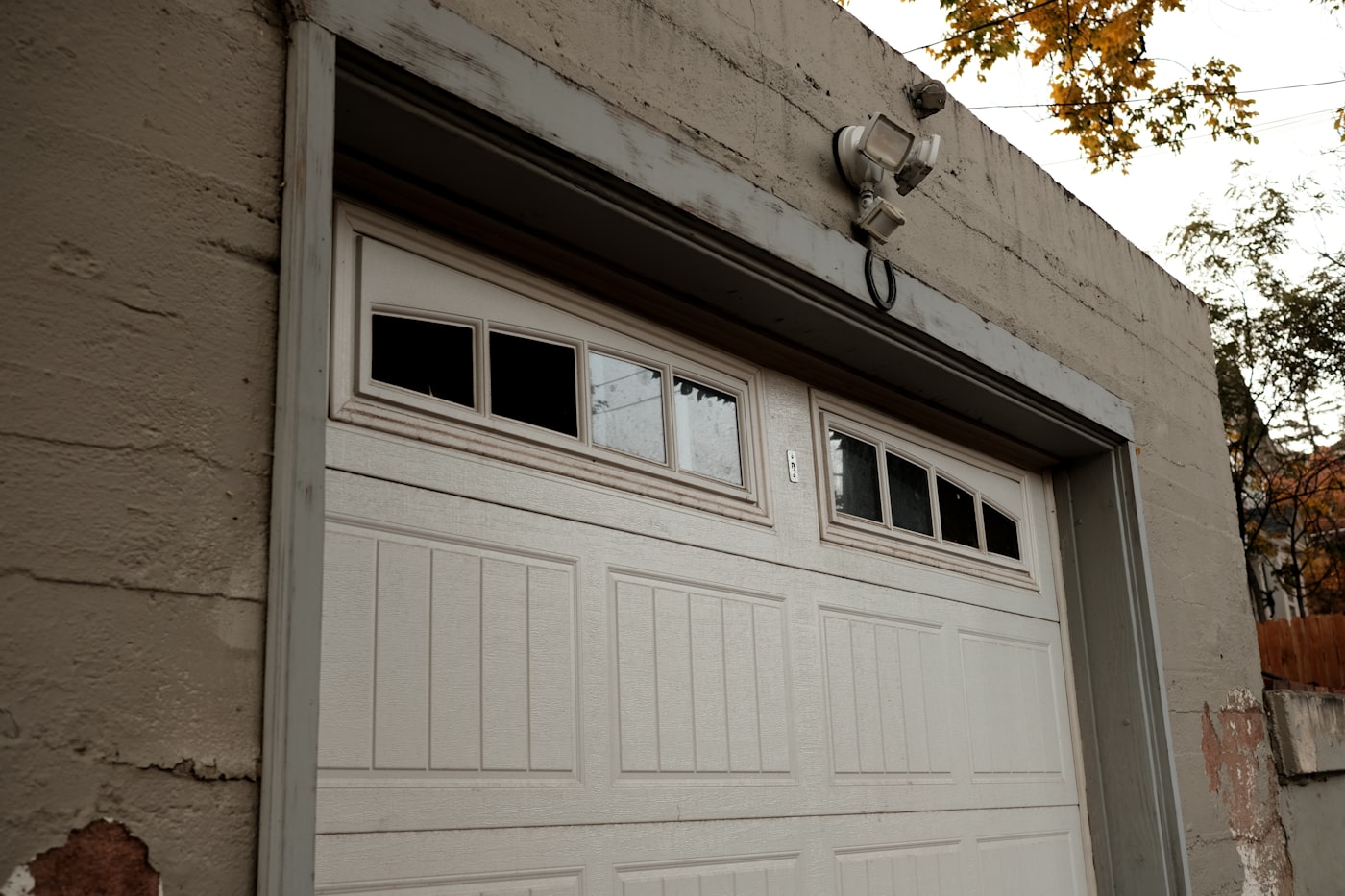
Cold is hard on garage doors. Steel contracts, grease thickens, springs become brittle, and the rubber bottom seal freezes to the concrete overnight so the opener strains against a door that is physically stuck to the ground. That combination is why we take more garage door calls in the first genuinely cold week of the year than in any month of the summer. We repair springs, cables, openers and tracks across Greater Boston, and we install insulated doors that make a real difference to an attached garage.
Broken torsion springs are the most common failure, and cold weather concentrates them. Springs fail from metal fatigue after a finite number of cycles, and cold makes the steel more brittle, so a spring that was already near the end of its life tends to let go on a January morning rather than in July. When one breaks, the door is suddenly a very heavy object with nothing counterbalancing it. Do not try to lift it manually, and disconnect the opener if it is fighting the door.
Frozen doors are the other seasonal call, and they are worth understanding because forcing one causes real damage. Meltwater refreezes under the bottom seal and bonds it to the slab. When the opener then tries to lift, it does not lift a door — it tries to tear a seal off concrete, and what usually gives way is a cable, a bracket, or the opener gear. A little heat on the seal and breaking the ice loose is the right approach.
Road salt is a New England-specific issue people rarely think about. Salt brine carried in on the car settles on the bottom of the door, on tracks and on hardware, and it corrodes steel considerably faster than plain water. Bottom panels rusting through from the inside out is common on doors ten or more years old in this region, and rinsing the bottom of the door occasionally in winter genuinely extends its life.
On replacement, insulation is the decision that matters most here. An attached garage sharing a wall with living space, or with rooms above it, loses substantial heat through an uninsulated door. An insulated steel door with a proper thermal break and good weather sealing makes the garage usable in winter and reduces the load on the rooms next to it. It is one of the few upgrades where the comfort difference is obvious immediately.
What our Massachusetts garage door service includes
- Torsion and extension spring replacement, correctly sized for your door weight
- Cable, drum, roller, hinge, bearing and track repair or replacement
- Frozen and stuck door release without damaging the seal, panels or opener
- Opener repair, replacement and installation, including belt-drive and smart openers
- Safety sensor alignment and reversal-force testing
- Off-track and derailed door correction
- Panel replacement, including rust-damaged bottom panels
- Insulated door installation for attached garages and rooms above the garage
- Weather seal, bottom seal and threshold replacement to stop drafts and ice bonding
- Winter tune-up: cold-rated lubrication, balance adjustment and hardware tightening
Why homeowners in Massachusetts call us
- Same-day availability for broken springs and doors stuck shut in cold weather
- Common springs, cables and rollers carried on the truck, so most repairs finish in one visit
- We use lubricants that stay workable in New England cold rather than thickening up
- Insulated door options that actually matter for an attached garage in this climate
- We repair when repair is the right answer instead of quoting a whole door by reflex
- Serving Boston, Cambridge, Somerville, Quincy, Newton, Brookline, Medford, Malden and nearby towns
What affects the cost
Garage door pricing separates sharply between repair and replacement. What drives it:
- Whether the job is a component repair or a full door replacement
- Spring type and size, which depends on the weight and construction of the door
- Door material and insulation level — insulated steel costs more than a single-layer door and performs very differently here
- Single versus double door
- Opener horsepower, drive type and smart features
- Whether tracks and hardware are reused or replaced alongside the door
- Extent of any rust or rot damage found at the bottom panel and jambs
Every quote is free and specific to your property — we do not price this kind of work over the phone without understanding what is actually there.
Recent work
Frequently asked questions
My garage door is frozen to the ground. What should I do?
Do not keep pressing the opener. What gives way is a cable, a bracket or the opener gear rather than the ice. Disconnect the opener with the emergency release, apply gentle heat along the bottom seal or work the ice loose carefully, and lift by hand once it releases. If something has already broken, call us — it is a routine repair.
Why do springs break more often in winter?
Springs fail from accumulated metal fatigue, and cold steel is more brittle, so a spring already near the end of its service life is more likely to break on a cold morning. The cold does not cause the wear, it just decides the timing. Most residential springs are rated around ten thousand cycles, which is a handful of years for a family using the garage as their main door.
Is an insulated garage door worth the extra cost in Massachusetts?
If the garage is attached, shares a wall with living space, or has rooms above it, yes — it makes a noticeable difference to both the garage and the adjoining rooms. If it is a detached garage used purely for storage, the case is much weaker and we will say so.
Can I replace a garage door spring myself?
We strongly recommend against it. Torsion springs hold a large amount of stored energy and winding them is where people get badly hurt. It is also easy to fit the wrong spring rate, which quietly wears out the opener over the following months.
The door is noisy and jerky in cold weather. Is something wrong?
Usually it is worn rollers, dry or thickened lubricant, or a door slightly out of balance. All of it is inexpensive to correct and all of it shortens the life of the opener if left. Cold weather exposes it first because thickened grease adds drag.
How long does a new garage door installation take?
Most single-family installations are done in a day once the door is on site. Lead time for a specific insulated door in a particular style and colour is usually the longer part of the schedule.
Get your garage door fixed properly
Same-day service on most repairs, free estimates on replacement doors, and no charge to tell you it is a simple fix.