
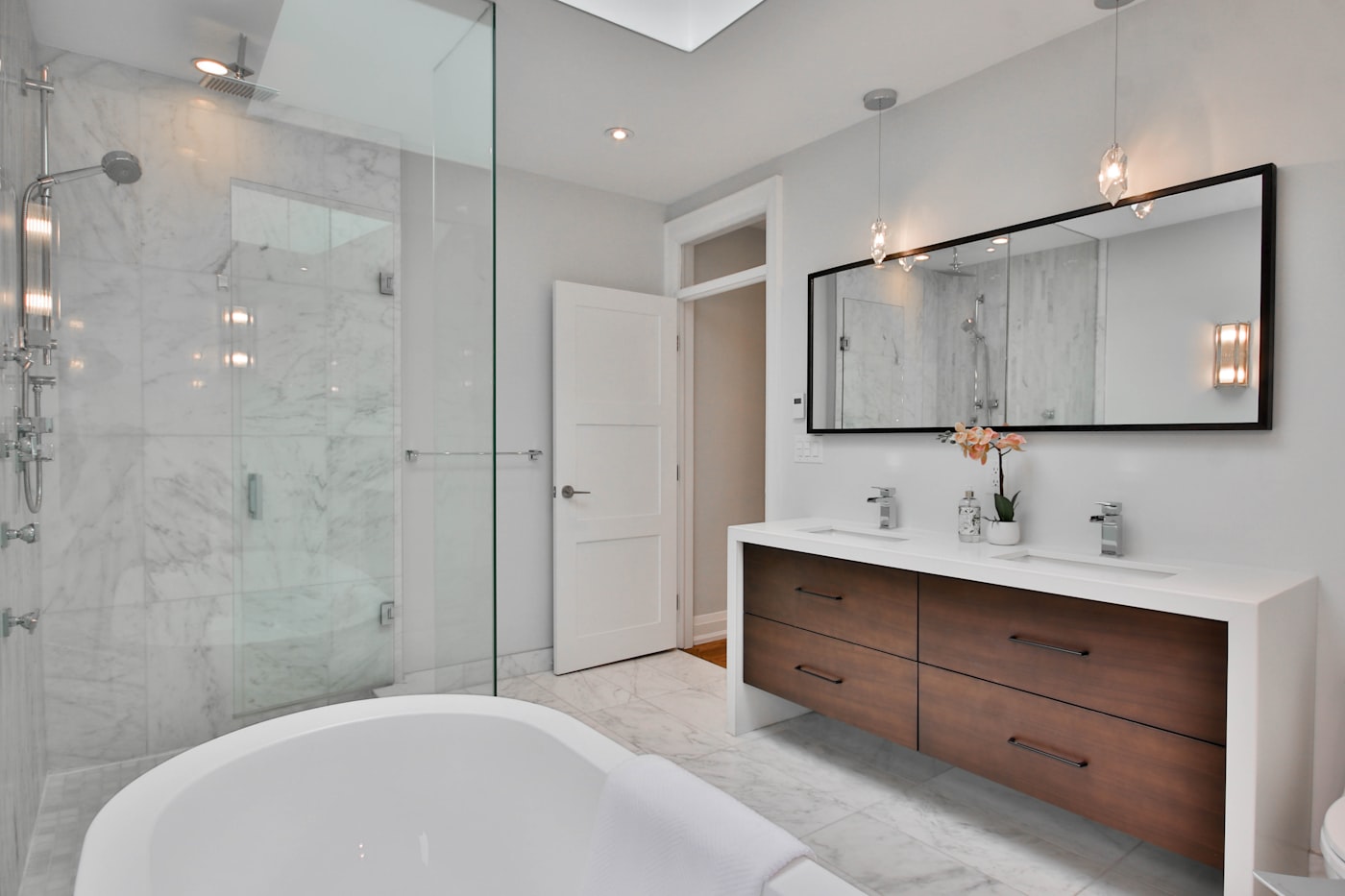
Remodeling in Greater Boston mostly means remodeling old buildings, and old buildings do not give up their secrets until the wall is open. Knob-and-tube wiring, cast-iron waste lines, plaster over lath, uneven framing, and lead paint are all normal findings here rather than surprises. We renovate kitchens, bathrooms, basements and whole interiors across the Boston area, and we plan for what these houses actually contain instead of quoting as though they were new construction.
The first thing that matters is what is behind the surface. Homes across Cambridge, Somerville, Dorchester and the surrounding towns commonly still have original wiring, galvanized supply lines that have narrowed to a fraction of their diameter, and framing that is nowhere near square. None of that makes a project impossible — it makes it a project that has to be scoped honestly. A quote that ignores the possibility of an electrical upgrade in a 1910 house is not a cheaper quote, it is an incomplete one.
Lead paint is a Massachusetts-specific requirement worth knowing about. Homes built before 1978 are presumed to contain it, and disturbing painted surfaces in those homes carries legal obligations around containment and work practices. It affects how the work is done, particularly with children in the house. We would rather explain that at the start than have it come up mid-project.
Basements are the other Boston-area conversation. Finished basement space is genuinely valuable in a city where square footage costs what it does here, but a Massachusetts basement is a damp environment and finishing one without addressing moisture first is how you get mold behind new drywall within two years. Managing water first, then insulating correctly for a cold climate, then finishing — in that order — is what makes the difference. Egress and ceiling height requirements also determine what the space can legally be called, which matters at resale.
On permits and licensing, Massachusetts requires a licensed Construction Supervisor for most structural work and a registered Home Improvement Contractor for residential remodeling, with a written contract that meets specific state requirements. Municipalities in this area also enforce their permitting seriously, and some neighbourhoods carry historic commission review. Unpermitted work reliably becomes a problem at sale or refinance. We pull what the job requires.
What our Massachusetts remodeling service includes
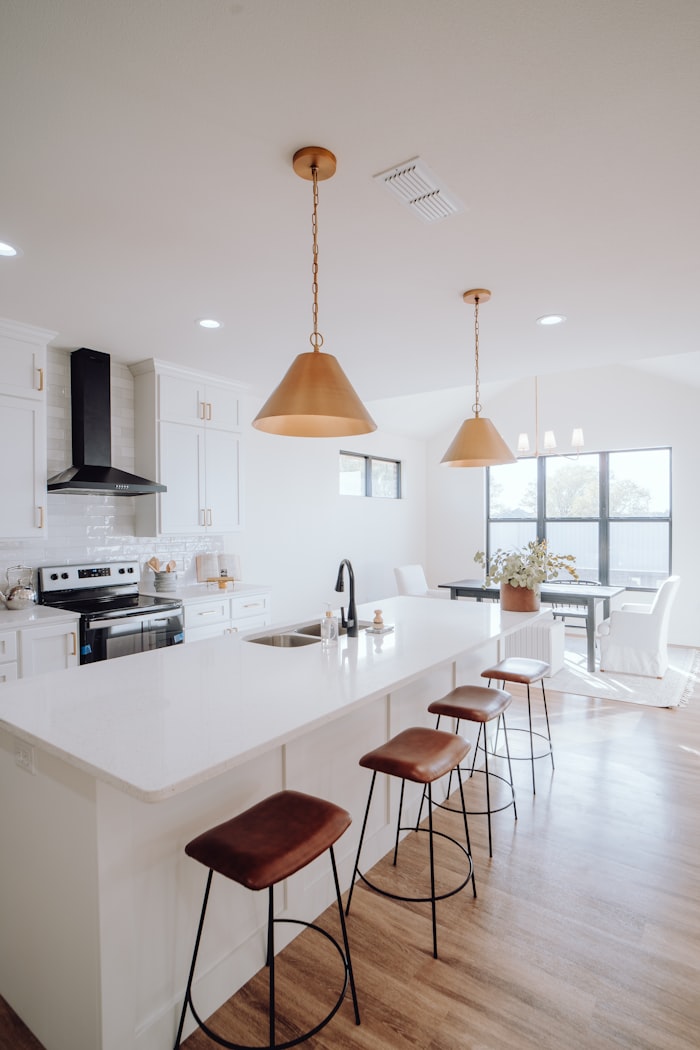
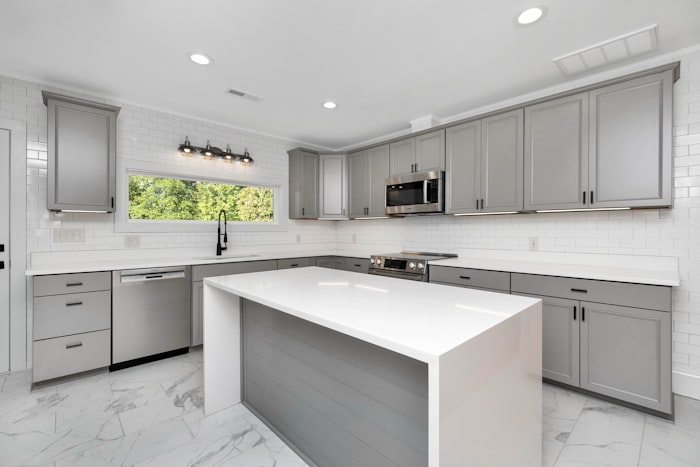
- Full kitchen remodels: cabinetry, countertops, backsplash, lighting and appliance fitting
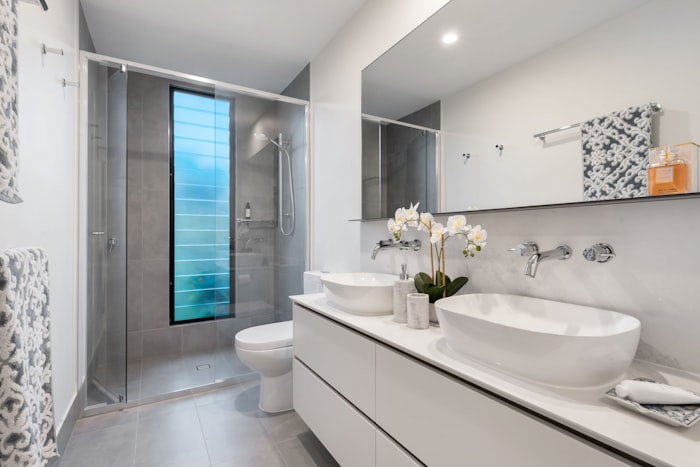
- Full bathroom remodels: shower and tub systems, vanities, tile, fixtures and ventilation
- Basement finishing with moisture management and cold-climate insulation detailing done first
- Waterproofing membrane and backer board behind wet walls, never tile over drywall
- Electrical updates including panel upgrades and replacement of outdated wiring
- Plumbing updates including replacement of galvanized supply and old waste lines
- Plaster and drywall repair, trim, doors, closets, painting and finish carpentry
- Flooring: tile, hardwood refinishing, engineered wood and luxury vinyl plank
- Lead-safe work practices in pre-1978 homes as Massachusetts requires
- Permit applications, inspection coordination and a written contract meeting state requirements
Why homeowners in Massachusetts call us
- We work in older New England housing stock constantly and scope for what is actually behind the walls
- Licensed and registered work, permitted properly, which protects you at resale and with your insurer
- Written scope, written schedule and clear communication when something changes
- Basement finishing done in the right order — moisture, then insulation, then finish
- One company for roofing, heating, ducts and interior work, so the trades are not blaming each other
- Serving Boston, Cambridge, Somerville, Quincy, Newton, Brookline, Medford, Malden and surrounding towns
What affects the cost
Remodeling has the widest price range of anything we do, and in older Boston homes the unknowns matter more than usual. What drives cost:
- Size of the space and how much of it is genuinely changing
- Whether plumbing or electrical is being relocated or updated — usually the largest hidden cost in an older home
- Condition of wiring, plumbing and framing discovered once surfaces are opened
- Material selection, where cabinetry, countertop and tile choices can move a budget dramatically
- Structural changes such as removing a wall, which in these houses often means adding a beam
- Lead-safe containment requirements in pre-1978 homes
- Permit scope, inspection schedule and any historic district review
- Whether the home is occupied during the work
Every quote is free and specific to your property — we do not price this kind of work over the phone without understanding what is actually there.
Recent work
Frequently asked questions
How long does a kitchen or bathroom remodel take in an older Boston home?
A straightforward bathroom is commonly a few weeks of active work; a full kitchen usually runs longer. Older homes add time when wiring or plumbing needs updating, and material lead times and inspection scheduling sit outside our control. You get a written schedule at the start and prompt notice when something moves.
What if you find knob-and-tube wiring or old plumbing behind the wall?
It happens regularly here and it is not a disaster, but it does change scope. We stop, photograph it, and give you the finding, the options and the cost in writing before spending your money. Discovering it and quietly building over it would be the genuinely bad outcome.
Do I need permits, and does the contractor need to be licensed in Massachusetts?
For most remodeling work, yes on both counts. Massachusetts requires a Construction Supervisor License for structural work and Home Improvement Contractor registration for residential remodeling, along with a written contract meeting specific state requirements. Unpermitted work becomes a problem at sale or refinance, which is why we do not skip it.
Can a basement be finished properly in Massachusetts?
Yes, if moisture is dealt with first. Water management, then correct cold-climate insulation detailing, then finishing — in that order. Finishing over a damp basement is how you get mold behind new drywall. Ceiling height and egress requirements also determine how the finished space can be classified, which affects resale value.
What is the lead paint rule and does it apply to my house?
Homes built before 1978 are presumed to contain lead paint, and disturbing painted surfaces in them carries legal requirements around containment and work practices, with additional obligations where young children live. Much of the Boston-area housing stock predates 1978, so it applies more often than not. We work to those requirements and explain them before we start.
Can I live in the house during the renovation?
For most single-room projects, yes, provided there is another bathroom or a workable temporary kitchen. We contain dust, protect floors and walkways, and clean up daily. For a whole-interior renovation it is usually easier on everyone to be out for part of it.
Let us look at your space
A free on-site consultation, a written scope, and an honest conversation about what these older homes tend to be hiding.